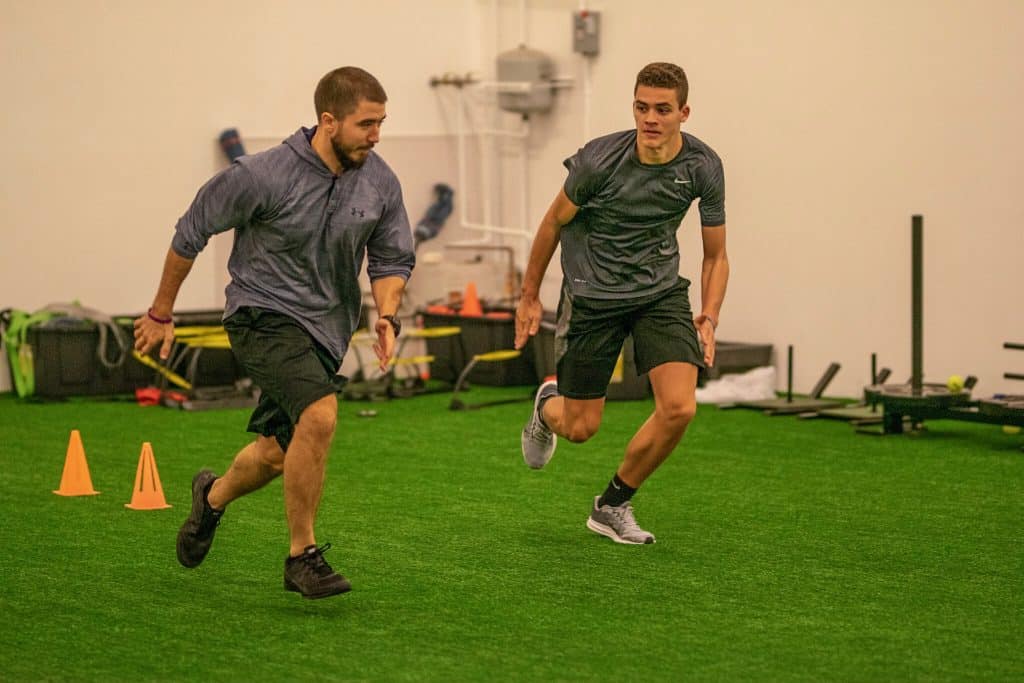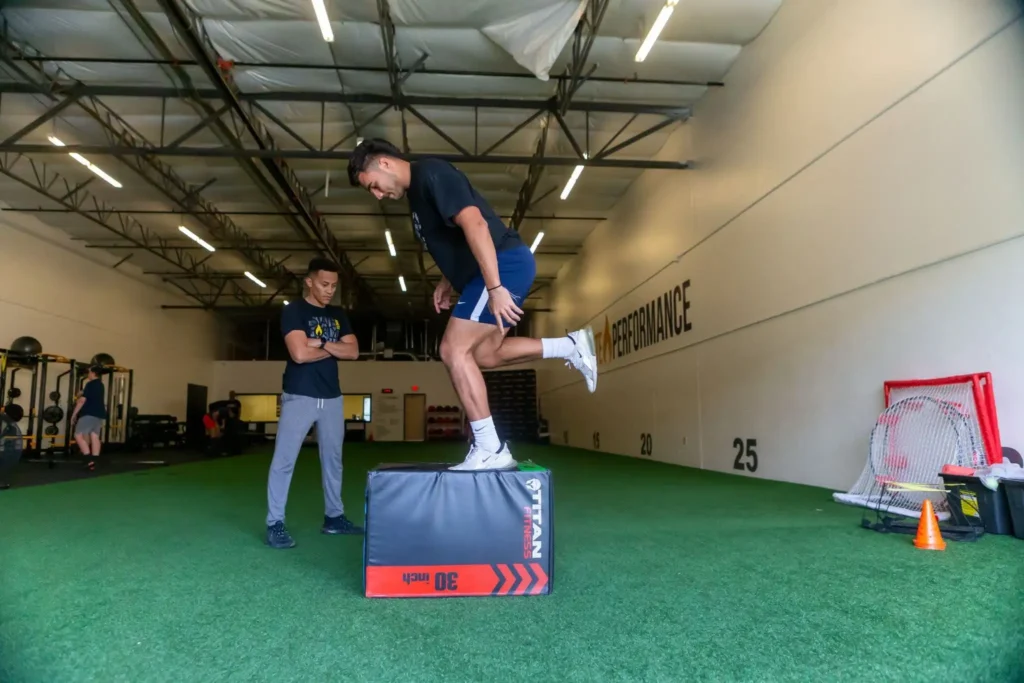
Summer is an important window for athletes. Not because it’s easy, but because it’s rare. Less school. Less game schedule. A clean stretch of time to close the gap between where your athlete is and where they want to be by the time next season starts.
But summer can also be treacherous if you don’t have a plan.
Without intention, most athletes tend to do one of three things:
- Overdo it
- Undertrain
- Focus on the wrong things
Any of those three will leave your athlete in the same place they started, or worse, heading into the fall beat up and behind.
Here are four keys to making sure summer actually counts.
1) Train With Intention
 One of the biggest mistakes we see is parents and athletes signing up for as many things as possible without thinking about how any of it actually connects to what their athlete needs.
Before committing to anything this summer, sit down together and ask two questions:
Where does my athlete need to be by the start of next season?
Where are the gaps right now?
For some athletes, the skill is already there but the athleticism needs work. More speed, more power, more explosiveness. For others, it’s the opposite. What’s key is being honest about the gap and building a summer around closing it.
The answers to those two questions should guide everything: which programs you choose, how many days you train, and where you invest your time and money.
More isn’t always better. Intentional is better.
Not sure where your athlete stands or what they need most this summer? Schedule an athlete evaluation and we’ll help you build a plan around it.
2) Show Up Consistently and Let the Body Adapt
The athletes who make the biggest gains over the summer aren’t always the ones who train the hardest. They’re the ones who show up consistently and give their body time to adapt.
Summer is the longest uninterrupted window your athlete will get all year. No games, no travel schedule pulling their focus midweek. That makes it the best opportunity to build real athletic foundations.
But consistency doesn’t mean training as hard as possible every day. One of the most common mistakes we see is athletes going too hard for too long, which doesn’t actually give the body time to adapt.
This becomes an even bigger concern when athletes are simultaneously playing and traveling. Training stress on top of competition stress adds up fast.
In order to adapt and improve, rest and recovery are required. Athletes should invest as much focus on recovery as they do on training. The work happens in the gym. The adaptation happens when they rest.
3) Schedule Time Off
Recovery means more than just rest days between training sessions. It means scheduled time off from their sport entirely.
With the year-round nature of athletics, many athletes never get a true break. Take baseball as an example. If your athlete just finished their high school season, summer rarely provides any real opportunity to rest.
Parents need to be intentional about putting the ball down and giving the arm a break.
Stress accumulation doesn’t always show up immediately. It tends to surface right when fall ball kicks in, and that’s how athletes end up in the hamster wheel of constant play, never fully recovering, never fully improving.
Scheduling time off isn’t a setback. It’s part of the plan.
4) Navigate the Showcase Circuit Wisely
 Showcases can be a great opportunity. But only if you approach them the right way.
The first mistake we see is overscheduling. More showcases does not mean more opportunities. Be selective. Quality over quantity.
Second, do your research. Not every showcase is worth the investment. Know who will be in the stands and whether college coaches and scouts will actually be there before you commit.
Third, prepare for it. If your athlete needs to run a timed 60 or 40-yard dash, they cannot just show up and go. There is a technical side to those tests that requires proper preparation.
A private training session focused specifically on that can make a significant difference in the result.
Finally, have a plan for the week leading up to it. We have seen athletes train too hard before a showcase and show up sore on the day of their run, posting a time that doesn’t reflect what they’re actually capable of.
We tell our athletes this directly: it is better to post no time than to post a bad one.
The right approach is enough activity to stay sharp and enough rest to perform when it counts.
The Bottom Line
Summer is a window. Use it well and your athlete comes back to their season noticeably better. Let it slip by without a plan and you’ll be playing catch-up when it matters most.
We hope this was helpful. If you’re interested in sitting down with one of our coaches to build a summer plan around what your athlete specifically needs, we would love to help.