For a lot of things in life, more is better. More money. More time with your family. More opportunities.
But when it comes to developing young athletes, more sport-specific training is not better. In fact, it might be working against your athlete in ways you won’t see until it’s too late.
Here’s what’s actually happening in youth sports right now, and what we believe is a better path forward.
The Shift Toward Sporting Monoculture
Youth athletes today are being pushed into sport-specific training earlier than ever before. More skills coaching. More hours on the field. Year-round competition. And the environment has shifted from a multi-sport approach to what some researchers call a sporting monoculture, where athletes grow up not only playing one sport but often playing one position within that sport.
The pressure to specialize early is real. Parents feel it. Coaches push it. And the marketing around elite youth programs makes it seem like the only path to success.
But the research tells a different story.
The Problems With Early Specialization
Development is not linear.
Athletes do not develop at the same rate or on the same timeline. What one athlete looks like at 11 years old is not necessarily what they will look like at 14. Forcing sport-specific training before foundational movement skills are in place assumes a level of readiness that simply may not be there yet.
Burnout is real.
There are outliers like Tiger Woods and Kobe Bryant who thrived under early specialization. But the reality is that most athletes are not Tiger Woods or Kobe Bryant. Athletes need time to rest, experience other things, and genuinely miss their sport. That mental break is what allows them to come back refreshed, motivated, and ready to grow. When athletes never get that, the passion that drives performance can start to erode.
Overuse injuries are on the rise.
There is a growing body of research around what is called the overuse injury hypothesis, which suggests that athletes who repeatedly perform the same movement patterns are at significantly higher risk for overuse injuries. Think about a baseball player throwing year-round. Tommy John surgery, Little League elbow, and shoulder injuries in young pitchers have become far more common than they were a generation ago. The connection to year-round, single-sport training is hard to ignore.
The 10,000 hours myth.
It may be tempting to chase the idea that your athlete needs to log as many hours as possible as early as possible. But the 10,000-hour rule, made popular by Malcolm Gladwell in his book Outliers, has since been significantly challenged by the research. Many experts would argue that 10,000 hours is neither necessary nor sufficient for elite sports performance. You can read more about that here.
The hours your athlete puts in matter far less than the quality and appropriateness of those hours for where they are in their development.
What if the sport changes?
Athletes grow. Bodies change. The sport that seemed like the right fit at age 9 may not be the right fit at age 14. If an athlete has spent years developing only sport-specific skills, they may find themselves starting from scratch if they pivot. But foundational movement skills, things like coordination, body awareness, speed, strength, and spatial understanding, transfer across sports and across life.
What We Believe Instead
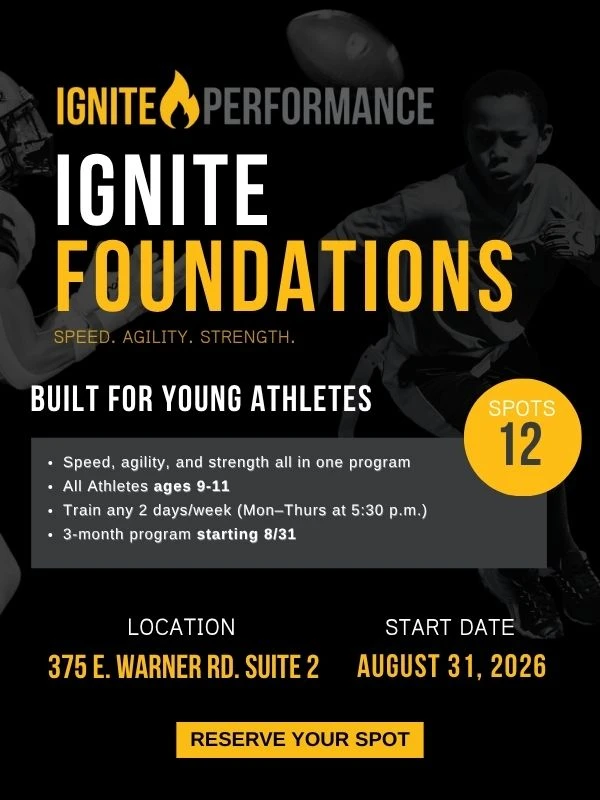 At Ignite, we believe the early years of athletic development should be about building a foundation, not locking athletes into a single path.
That is exactly what Ignite Foundations was designed to do.
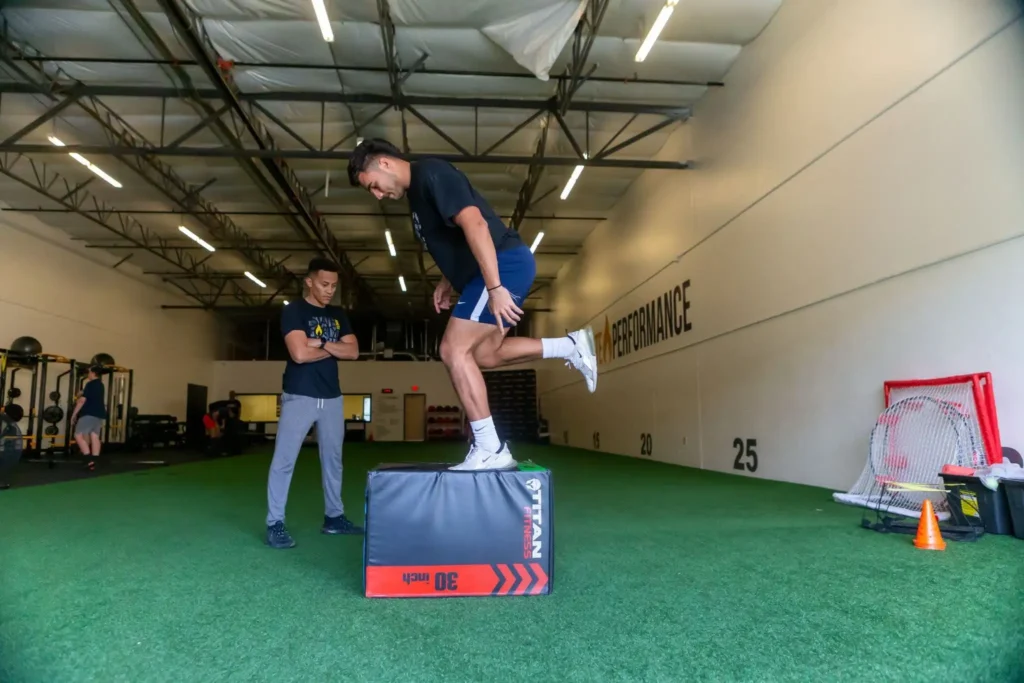
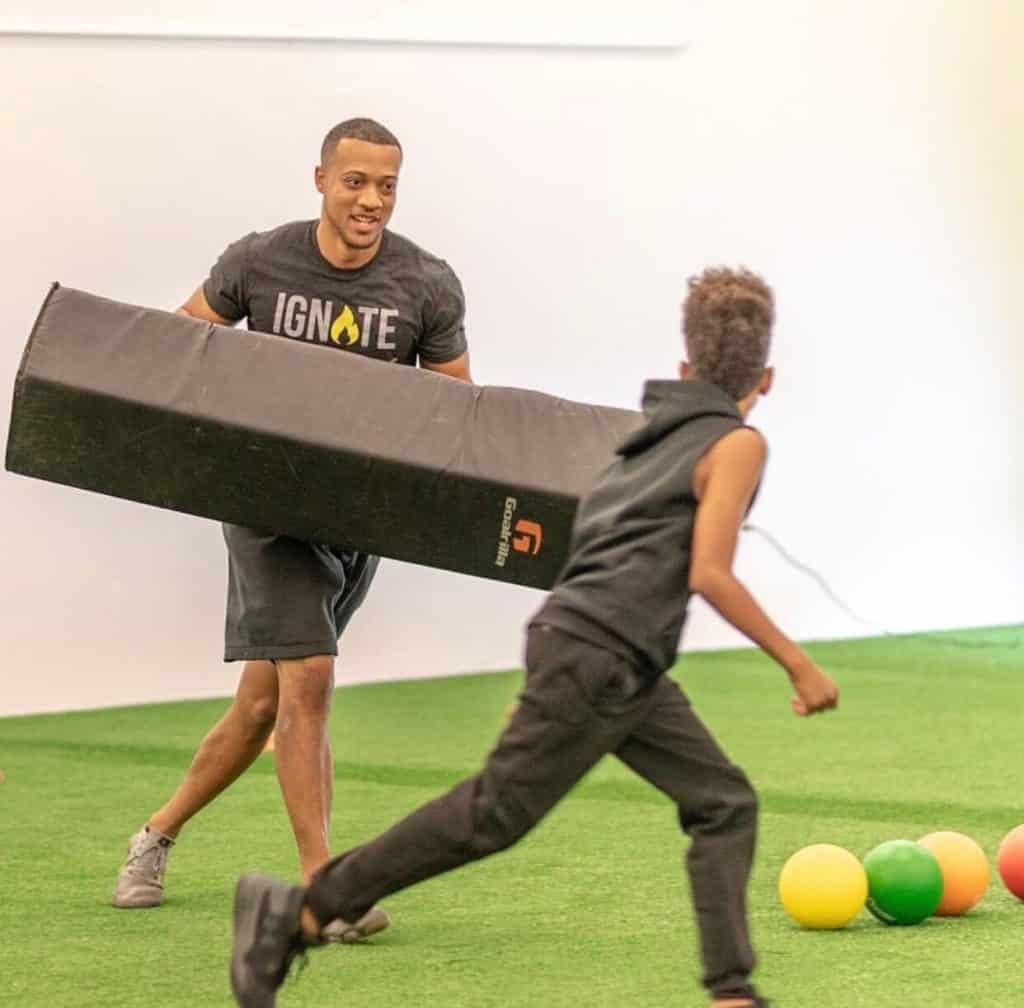
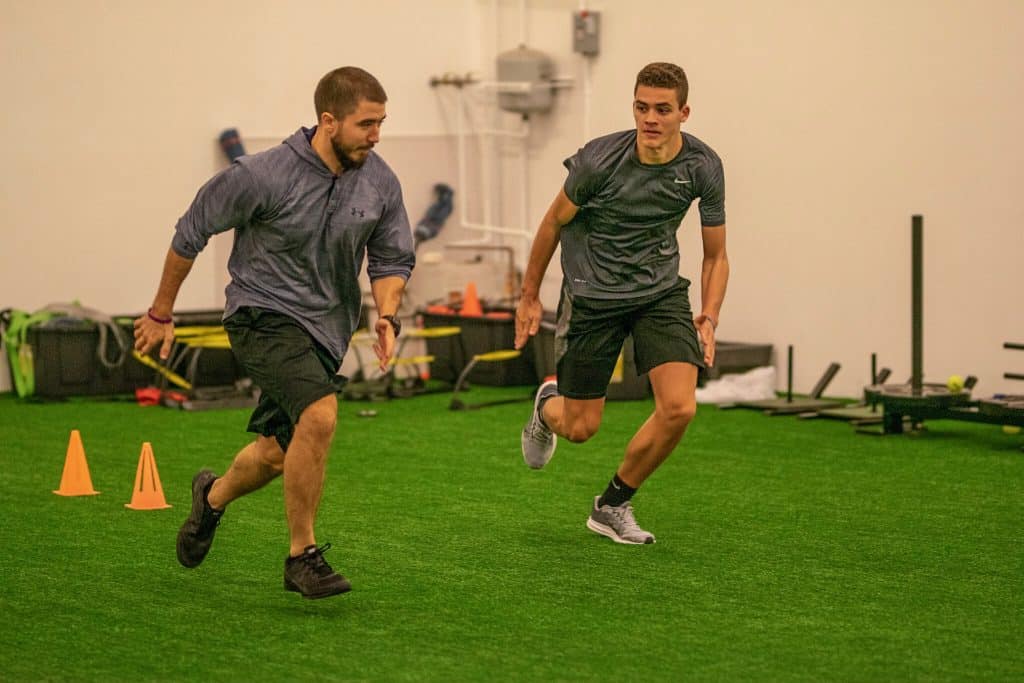
Ignite Foundations is a program built for young athletes who are still figuring out who they are as movers and competitors. We focus on foundational movement skills and strength development that will serve them in whatever sport they choose, at whatever level they ultimately reach.
And if they decide sports are not for them? That is okay too. Our goal is for every athlete who comes through our doors to leave with a love of movement and a desire to stay active for life. That matters more than any sport-specific skill we could teach them.
Because at the end of the day, the foundation you build early is the one everything else gets built on.
Interested in learning more about Ignite Foundations? Sign up here and let’s get your athlete started on building a strong foundation for whatever comes next.